Where Should You Place Acoustic Panels?
Updated
Place acoustic panels at the first reflection points first: the spots on the side walls where sound from your speakers or your voice bounces once on its way to your ears. After that, add a ceiling cloud between you and the speakers, panels on the front and rear walls, and bass traps in the corners.
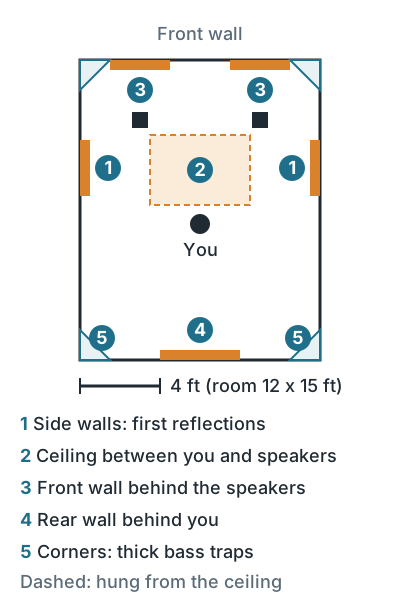
To find spot 1, sit in your usual seat while a helper slides a mirror flat along the side wall. Anywhere you can see a speaker in the mirror, sound from that speaker bounces to you (Primacoustic's mirror trick (opens in a new tab)). Mark where each speaker shows up and where it disappears, hang panels over the marks at ear height, then do the same on the other wall. For a desk mic, do the trick from where the mic sits.
The rest, in order:
- Ceiling: a cloud hung with a gap above it catches the overhead reflection and adds absorption when you run out of wall space (Primacoustic (opens in a new tab)).
- Front wall: a couple of 3 in. panels behind the speakers add definition; see whether to put acoustic panels behind speakers.
- Rear wall: only treat the spots the mirror shows you, since "too much absorption will remove the energy and excitement," as Primacoustic warns.
- Corners: low frequencies pile up there, so that's where the thick bass traps go.
Rooms with several sound sources and no fixed seat, like a dining room, just need panels spread out evenly. How many acoustic panels you need turns all this into a count, and studio soundproofing panels lays out a full home studio.
One thing, though: where you put soundproof panels won't stop noise coming through the wall. That takes mass and sealed gaps, as the soundproof panels guide explains. There are more answers in the soundproof panels FAQ.