Acoustic Panels vs Foam: Which One Cuts Noise More?
Updated
Fiberglass and mineral wool acoustic panels soak up more sound than foam of the same thickness. It's NRC 1.00 against 0.75 at 2 in., and 0.70 against 0.50 at 1 in. But on noise reduction effectiveness through a wall, acoustic panels vs foam is a tie. Neither one blocks sound. Go with fiberglass if you want the most echo control per inch and an easy fire rating. Go with foam when low weight and going easy on the wall matter more.
Acoustic panels vs foam, side by side
When we say acoustic panel here, we mean a fiberglass or mineral wool board, usually wrapped in fabric. Foam means open-cell polyurethane or melamine sheets, cut flat or into wedges.
| Fiberglass or mineral wool panel | Acoustic foam | |
|---|---|---|
| NRC at 2 in. | 1.00 (Owens Corning 703 (opens in a new tab)) | 0.75 (Auralex Studiofoam Wedge (opens in a new tab)) |
| Density | 3.0 lb/cu ft (703) | 1.5 to 1.7 lb/cu ft (Auralex) |
| Fire rating | Unfaced 703: flame spread 5, smoke 5 | Varies: UL 94 HF-1 to Class A |
| Weight | 0.5 lb/sq ft at 2 in. | 0.27 lb/sq ft at 3 in. (wedge) |
The Auralex density and weight come from its 3 in. Riverbank lab report (opens in a new tab). The 703 weight is just 3.0 × 2 ÷ 12. If you're hanging framed panels, mounting is covered in how to install acoustic wall panels.
Acoustic panels vs foam soundproofing: absorption effectiveness
Inch for inch, fiberglass board soaks up more than wedge foam. Its NRC is 0.20 higher at 1 in., 0.25 higher at 2 in. and only 0.05 higher at 4 in.
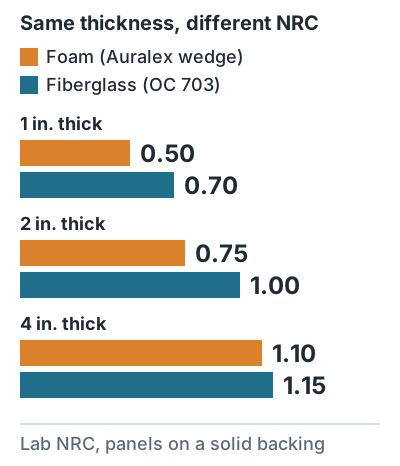
Foam can catch up with a different cut, though. Auralex's flat 1.5 in. Studiofoam Pro rates NRC 0.90 on its spec sheet (opens in a new tab). That beats the company's own 2 in. wedge. So compare products by their lab NRC, not by what they're made of.
Bass absorption: thickness beats material
At 125 Hz, 1 in. foam and bare 1 to 2 in. board are all pretty weak. Thickness is what moves the number.
| Panel | 125 Hz | Source |
|---|---|---|
| 1 in. wedge foam | 0.10 | Auralex (opens in a new tab) |
| 1 in. OC 703 | 0.05 | Owens Corning (opens in a new tab) |
| 2 in. OC 703 | 0.15 | Owens Corning (opens in a new tab) |
| 2 in. fabric-wrapped fiberglass panel | 0.45 | Primacoustic Broadway (opens in a new tab) |
| 3 in. wedge foam | 0.23 | Auralex (opens in a new tab) |
| 4 in. OC 703 | 0.56 | Owens Corning (opens in a new tab) |
Here's the surprise: thin foam actually beat thin fiberglass at 125 Hz in these tests. And a finished 2 in. Broadway panel tested three times higher than bare 2 in. 703, so look at lab reports for the finished panel, not just its core. If your room has boomy bass, you want 4 in. panels or corner traps, whichever material you pick.
Noise through walls: neither one helps
Neither foam nor fiberglass panels cut noise coming through a wall enough for you to hear a difference. Blocking comes down to weight and airtightness. A 2 in. 703 panel weighs 0.5 lb/sq ft and a 3 in. foam wedge 0.27 lb/sq ft. One layer of 5/8 in. drywall weighs 2.2 lb/sq ft (USG (opens in a new tab)).
Example: In USG's lab tests (opens in a new tab), adding that whole drywall layer to an insulated 2x4 wall bought just 3 STC points (34 to 37). A fiberglass panel at under a quarter of the weight, or foam at an eighth, adds less.
The full story is in do acoustic panels soundproof a room. What actually does block sound is in the soundproof panels guide.
Fire rating: fiberglass passes easily, foam varies
Unfaced Owens Corning 703 tests at a flame spread index of 5 and smoke developed of 5 to ASTM E84, comfortably inside Class A, which allows flame spread of 0 to 25 (WoodWorks, IBC 803.1.2 (opens in a new tab)). Foam ratings differ from product to product, so read each data sheet.
- Auralex Studiofoam Wedges: UL 94 HF-1, with no ASTM E84 class listed.
- Auralex Studiofoam Pro: Class A to ASTM E84.
- Willtec melamine foam: Class 1 to ASTM E84 in every finish. The natural finish also passes the UL 1715 corner burn test (Sonex (opens in a new tab)).
A finished panel's fabric and frame can rate differently from its core, so check the rating on the whole product. There's more in are acoustic panels fire resistant.
Cost per panel
GIK Acoustics' list prices as of October 2026 put its fabric-covered panels at about $15 to $20 per square foot. The 2 x 4 ft, 3.5 in. FlexRange Acoustic Panel (opens in a new tab) (NRC 1.05) lists at $119, or $14.88/sq ft. The 2 x 5 ft, 2 in. FreeStand Acoustic Panel (opens in a new tab) (NRC 1.05) lists at $199, or $19.90/sq ft.
Rule: Divide the price by the square feet, then compare panels with the same NRC. A cheap panel with half the NRC needs twice the wall area.
Which to buy
Pick by what the room is for and the rules it has to meet.
Home office or call room
Either
2 in. of either one cuts echo. Fiberglass does more per inch.
Studio or theater with bass
Fiberglass, 4 in.
0.56 at 125 Hz for 4 in. 703.
Business or public space
Class A only
Fiberglass, melamine or foam with a Class A rating.
Noise from next door
Neither
Seal the gaps, add mass, decouple.
The foam side in depth, shapes and density included, is in soundproof foam panels.
FAQ
Is mineral wool better than fiberglass for panels?
They perform about the same. 2 in. Rockwool Comfortboard 80 (opens in a new tab) rates NRC 0.95 against 1.00 for 2 in. 703 fiberglass. The full comparison is in fiberglass and mineral wool soundproof panels.
Does fabric lower a fiberglass panel's NRC?
Not if the fabric breathes. Primacoustic's fabric-covered 2 in. Broadway panel tested NRC 1.00 at Riverbank (test report (opens in a new tab)), the same as bare 2 in. 703. Picking a fabric is covered in what fabric to use for acoustic panels.
Can I mix foam and fiberglass panels in one room?
Sure. Every panel's absorption adds to the room total. Put fiberglass where you need bass control and foam where you need something light.
Which is better for a home studio?
Fiberglass or mineral wool, at 4 in. where bass builds up. Thickness is what drives low-frequency absorption. Studio soundproofing panels covers both treatment and isolation, and there are more answers in the soundproof panels FAQ.