How to Hang Acoustic Panels on a Ceiling
Updated
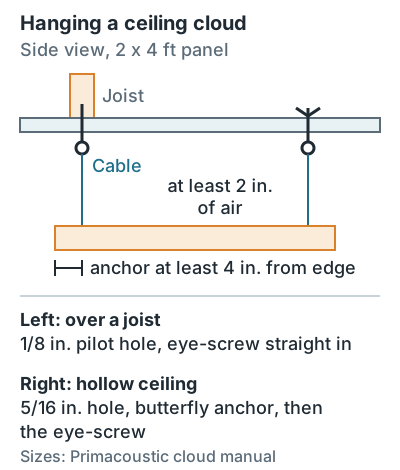
To hang acoustic panels on a ceiling, drive four eye-screws per panel into a joist, or into butterfly anchors where the ceiling is hollow, then hang the panel on cables with at least 2 in. of air above it. Those specs come from Primacoustic's cloud manual (opens in a new tab). Use mechanical hardware overhead. If a glue bond lets go, the panel lands on somebody.
- Find the backing. Tap a nail into the ceiling at each hanging point. Solid means you've hit a joist; hollow means it's just drywall.
- Mark the panel. Lay out four anchor points on the back, each at least 4 in. in from the edge and right under a ceiling point.
- Fix the ceiling hardware. In a joist, drill a 1/8 in. pilot hole and drive the eye-screw. In a hollow spot, drill a 5/16 in. hole and set a butterfly anchor first.
- Fix the panel anchors. Push and twist each one into the back of the panel until it sits flush.
- Hang and level. Run each cable from its eye-screw down to its panel anchor, then adjust until the panel is level.
Don't count on adhesive or pins overhead. Auralex says T-pinned foam on a ceiling "may result in some sagging" (Auralex (opens in a new tab)), and its adhesive "may not be suitable for all ceiling applications" (Auralex adhesives spec sheet (opens in a new tab)).
Ceiling panels soak up echo. They won't stop footsteps from upstairs. That's impact noise, and it takes the decoupled ceiling covered in soundproof ceiling panels. For walls, see how to install acoustic wall panels, and there's more in the soundproof panels guide and the soundproof panels FAQ.